Heats, Finals and the Art of the Nap: A Birmingham 2026 Session Plan for the Long Haul
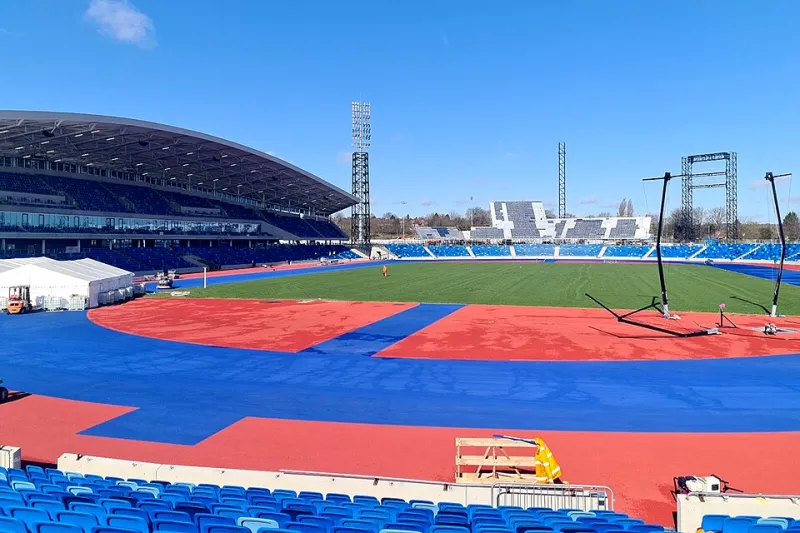
Photo: Stephen - Itsyourbuild, CC BY-SA 2.0, via Wikimedia Commons
A three-day athletics binge sounds like a great idea in March. Then you get to August, the sun is out, the stands are full, and you have been in the same plastic seat for five hours watching qualifying rounds of the 1,500m. The Birmingham 2026 European Championships will be a brilliant summer event, but it rewards a little planning. This is a session-planning guide for fans who want the drama without the wall.
Morning or evening? The real trade-off
Morning sessions are cheaper, calmer, cooler and easier to navigate. You will see heats, qualifying rounds, multi-event action and the early stages of field events. If you love the mechanics of athletics — lane draws, qualifying times, the long grind of a decathlon — mornings are a pleasure. If you are a first-timer who wants the roar of a final, mornings can feel like a warm-up act.
Evening sessions are the opposite: louder, later, more expensive and more likely to deliver medals. The trade-off is fatigue. A 7pm start that runs past 10pm is fine on Friday. By Sunday, with a train home on Monday, it is a commitment.
My rule: for a first-timer, book one morning session and two evening sessions across a long weekend. For a track nerd, book two mornings and two evenings, then accept that you will sleep on the train.
What actually deserves your priority
Do not try to see everything. You cannot. Prioritise the evening finals — sprint finals, relays, middle-distance finals and the final night's action. Those are the sessions with the biggest atmosphere and the clearest narrative.
Field events are the hidden bargain. A high jump or pole vault final plays out beside the track for two hours, with a slow build and a sudden climax. If you sit near the field events, you get both the track races and the jaw-dropping clearances without moving. Long jump and triple jump are similar. If you are choosing between a morning heats session and a field-event-heavy evening, choose the evening.
Heats involving big British names can be great fun, but do not build your whole weekend around them. Athletes often do just enough to qualify. Save your emotional energy for the finals.
The rest window is not weakness
Spectator fatigue is real. It shows up as a sore back, a short temper, decision fatigue and a sudden inability to remember which heat you are watching. The fix is not another coffee. The fix is a rest window.
Build three or four hours between sessions. Leave the stadium, eat a proper meal, sit somewhere with a backrest, and do nothing for 45 minutes. A nap is not lazy; it is performance nutrition for fans. If you are staying in a hotel, go back. If you are not, find a park, a cafe or a quiet pub and reset.
Pack layers, a cushion or a folded jumper to sit on, earplugs if you are noise-sensitive, and a hat. The stadium will be sunnier and windier than you expect.
Sample itinerary: the first-timer's long weekend
Friday: arrive early afternoon, check in, eat, then evening session. Focus on the atmosphere rather than the schedule. Leave when it finishes, not before.
Saturday: morning off. Late breakfast, city centre wander, early lunch. Evening session — this is your big night. Stay for the finals.
Sunday: morning off again. Brunch, maybe the Balti Triangle or a museum. Afternoon or evening session depending on your train home. Do not book a Monday morning train if you are doing Sunday night.
That is three sessions in three days, not five. It will feel like plenty.
Sample itinerary: the track nerd's marathon
Friday: morning heats, then out for lunch and a nap. Evening session. This is the only day you do two sessions.
Saturday: morning session for field-event qualifying and multi-events. Long afternoon rest. Evening session for finals.
Sunday: morning off, late morning field events, evening finals. Leave the stadium early if you need to catch a train.
Monday: do not book anything before 10am. You will be tired, and you will want a proper breakfast.
The fatigue checklist
If you are snapping at strangers, skipping warm-ups because you cannot face the stairs, or buying a £9 hot dog out of pure despair, you are hitting the wall. Take one session off. Sit in the shade. Drink water. Leave early. The championships will survive without you for two hours.
Use the city as your rest stop
Birmingham is compact enough to be useful. Between sessions you can walk the canals, sit in the library, look at the museum or eat a proper lunch without turning the day into a tourism project. Rest windows work best when they are short, local and low-stakes. You are not there to tick off attractions; you are there to be in good shape for the evening session.
Booking notes
Choose sessions early once the schedule is clear. Evening finals will sell best. If you are buying for a group, agree on a meeting point outside the stadium before the day, because phone signal can be patchy when everyone is trying to find each other. And build in travel time: Alexander Stadium is not in the city centre, and the queues after a big final are part of the experience.
The best long weekend is not the one where you see the most races. It is the one where you are still enjoying the racing on Sunday night. Plan the naps. Protect the finals. Leave the stadium occasionally.