The Form Guide in Your Hand: Decoding Birmingham 2026 Start Lists Without a Coaching Badge
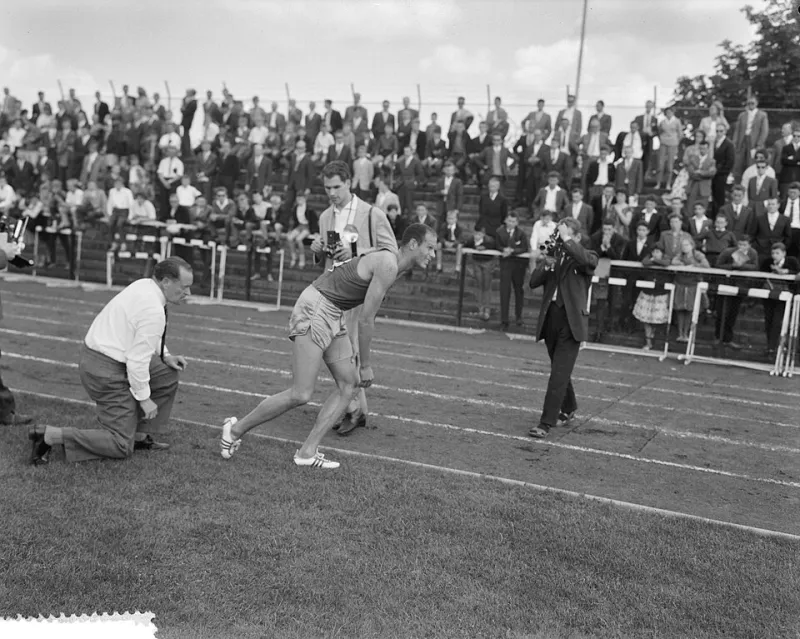
Photo: Wim van Rossem for Anefo, CC0, via Wikimedia Commons
A start list can look like a spreadsheet had a baby with a bus timetable. Rows of names, numbers, letters and brackets, all printed in a font that seems designed for people with a clipboard and a stopwatch. But stick with it. At Birmingham 2026, that humble sheet is your best free tool for following the storylines, spotting a potential surprise and sounding pleasantly knowledgeable in the queue for a coffee.
You do not need a coaching badge. You need about ninety seconds and a rough idea of what the columns mean.
What you are actually holding
A programme tells you what is on and when. A start list tells you who is in it. For each event and round, you will usually get the heat, the lane or field order, the bib number, the athlete, their country, their personal best and their season's best. Some versions add entry marks, rankings or notes. The trick is not to read every line like a legal document. Find the event you care about, scan the names, then work across the row.
If you are at Alexander Stadium for a morning session, the start lists are your morning paper. If you are watching at home, they are the tab you keep open next to the BBC feed. Either way, they turn a race from 'some people running' into 'that person has a point to prove'.
Bibs and lanes: clues, not verdicts
Bib numbers are not a secret code to the podium. They often reflect entry order or seeding, but they are not a guarantee of form. A low bib can mean a well-ranked athlete; it can also mean an entry was processed early. Do not read too much into it.
Lane draws are more interesting. In sprints, the middle lanes are generally the favoured ones because the bend is gentler and the athlete has company nearby. But an outside lane is not a tragedy, and a lane eight runner can absolutely win. In distance races, lane one can be tactically useful or a trap, depending on how the race unfolds. In field events, the order matters less than the athlete's PB and SB.
The useful rule: lane draws tell you about the shape of the race, not the result. They are a hint, not a prophecy.
PB versus SB: the difference that actually matters
PB means personal best — the athlete's best ever mark. SB means season's best — their best this year. This is the bit that separates a casual glance from an actual form guide.
If an athlete's SB is close to their PB, they are probably in good shape. If their SB is miles off their PB, it does not mean they are washed up. It might mean they are returning from injury, building through the season, or have only raced once in poor conditions. If the start list prints the date of the PB, look at it. A PB from five years ago is history; an SB set last month is news.
In sprints and jumps, wind readings matter. A wind-assisted PB is still a PB in some lists, but it is not the same as a legal one. You do not need to become a wind-reading obsessive. Just know that a fast time with a strong tailwind is a slightly different beast from a fast time in still air.
Heat rankings and the alphabet soup
This is where new fans often get lost. In heats, the top few athletes in each heat usually qualify automatically. Those are often marked Q. Then there are the fastest losers, often marked q. Yes, lower-case q. It is annoying, but it is not personal.
So if your athlete finishes third, do not immediately leave. They might be through as a fastest loser. If they finish fourth in a slow heat, it is probably time to check the next event. The start list will not tell you the future, but it will tell you how many automatic spots there are and how many fastest-loser places are available.
You will also see DNS, DNF and DQ. DNS means did not start. DNF means did not finish. DQ means disqualified. These are the small heartbreaks and administrative hiccups that make a programme feel alive.
The small print that hints at a surprise
Start lists are not just about the obvious favourites. Look for the athlete with a big PB but a modest SB — they might be rounding into form. Look for a junior with a fast SB and no big reputation. Look for someone entered in two events, because doubling up is a clue that they are fit and confident. Look for a national record holder from a smaller nation who might be overlooked in the heat of a major championship.
Also check for withdrawals. A late scratching can change the shape of a heat and open a fastest-loser door. The start list is a living document; the version you buy on Tuesday may not be the version that matters on Friday.
Picking a storyline without faking it
You do not need to pretend you have watched every Diamond League meeting since March. Pick one event, pick one athlete, and follow them through the rounds. Use the start list to compare their SB with the rest of the field. If they are within a tenth of a second of the fastest entrant, that is a story. If they are two seconds off, that is a different story — perhaps a personal best chase or a tactical qualifier.
Good phrases to have in your pocket: 'Their SB is close to their PB, so they are in form.' 'That is a big PB but the SB is a bit slower — could be a season's best coming.' 'They are in the fastest heat, so they will need to run something serious.' None of that requires a coaching qualification. It just requires reading across the row.
The ninety-second routine
When the start list lands, do this. Find your event. Find your athlete. Check the heat and lane. Compare PB and SB. Note whether they need a Q or a q. Check for a withdrawal or a doubling-up. Then put the sheet away and watch the race.
The start list is not the whole story. It is the opening paragraph. But read it properly, and Birmingham 2026 becomes a lot more fun — less like watching strangers run in circles, more like following a summer-long plot with times, lanes and tiny letters doing the heavy lifting.